The older you become, the more likely you are to get a variety of diseases: atherosclerosis, cancer, diabetes, etc. Part of the reason is that your cells and organs don’t work as well at advanced age. Your cells have more genetic damage, so they become cancers more frequently. At the same time, your immune system kills cancerous cells more slowly. These and similar mechanisms lead to a higher frequency of diseases in late-life, many of which are incurable.
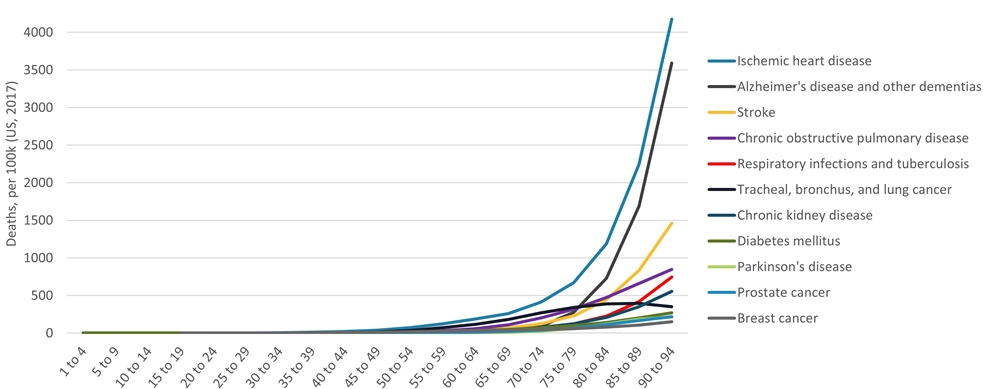
What gives room for hope is the idea that the age-related diseases observed in older populations are the consequence of a relatively small set of underlying mechanisms. For example, if arterial plaques lead to both heart attacks and strokes, then we could address both problems by targeting plaques directly. In fact, it will be faster and easier to target these age-related changes to prevent disease, rather than trying to develop individual therapies age-related conditions after they occur.
This is the main idea behind the geroscience hypothesis. Our bodies change in detrimental ways as we age and this slow accumulation of age-related damage leads to dysfunction and disease. If we create technology to repair that damage, then the diseases will be delayed and people will live longer, healthier lives.
This has been done in animals, where scientists have developed therapies that delay or even reverse some aspects of aging. It’s a promising approach for both new biotech startups, who will benefit from large markets and many indications for their therapies, as well as investors, who will get bigger outcomes with lower risk. Momentum has been building as entrepreneurs adopt this strategy, and it looks like a new paradigm of therapies will hit the market over the next decade.
 Kris Borer