Adam Gries and I were invited as guests on the No-Nonsense Nerds podcast to discuss the longevity strategies for radical life extension. If you want a two-hour deep dive on different strategies for extending healthy human lifespan, you can view the recording below.
Replacement Technology for Radical Life Extension
The Foresight Institute invited me to give a talk about the potential for replacement technology to reverse aging. You can see the recording below:
If you have any questions, or would like to get involved, please let me know.
the prospects for solving aging with bioengineering
Malav Trivedi and I were wondering how long it might take to find bioengineering solutions that can reverse aging enough to keep people from aging to death. Below is our sketch of one possible timeline we worked out for the Longevity Biotech Fellowship.
Continue reading “the prospects for solving aging with bioengineering”2060 Longevity Forum
I was invited to speak at the inaugural 2060 Longevity Forum and had a great time meeting everyone. Many thanks to the 2060 Foundation for hosting the event. My talk was a 10-minute overview of the Longevity Biotech Fellowship‘s Longevity Acceleration Roadmap, which you can watch below.
Longevity Biotech Fellowship Roadmap
I was invited to present the Longevity Biotech Fellowship‘s roadmap at Infinita City and had a great time hanging out with everyone. The original recording is here but, in the video below, I’ve added the presentation slides for clarity.
If you have any questions about longevity technology, investing, or how you can help, please let me know!
Libertarian Scholars Conference 2025
I was invited to speak at the Libertarian Scholars Conference this year and gave a short presentation on Michael Huemer‘s paper Lexical Priority and the Problem of Risk. Here is the video:
I saw quite a few excellent presentations during the conference, so you can look forward to reading some fun papers when they are published later this year.
Etika anarchokapitalismu
My friend Simon just revealed to me that he secretly published a Czech translation of The Ethics of Anarcho-Capitalism last year. He tells me that the translator understands the subject well, so I’m hopeful that Czech readers will enjoy it.

what is aging?
I recently attended the Longevity Frontiers Workshop, which was a fantastic event hosted by the Longevity Biotech Fellowship and the Foresight Institute. One of the highlights was an impromptu debate on the underlying mechanisms of aging between Jean Hebert and Vadim Gladyshev.
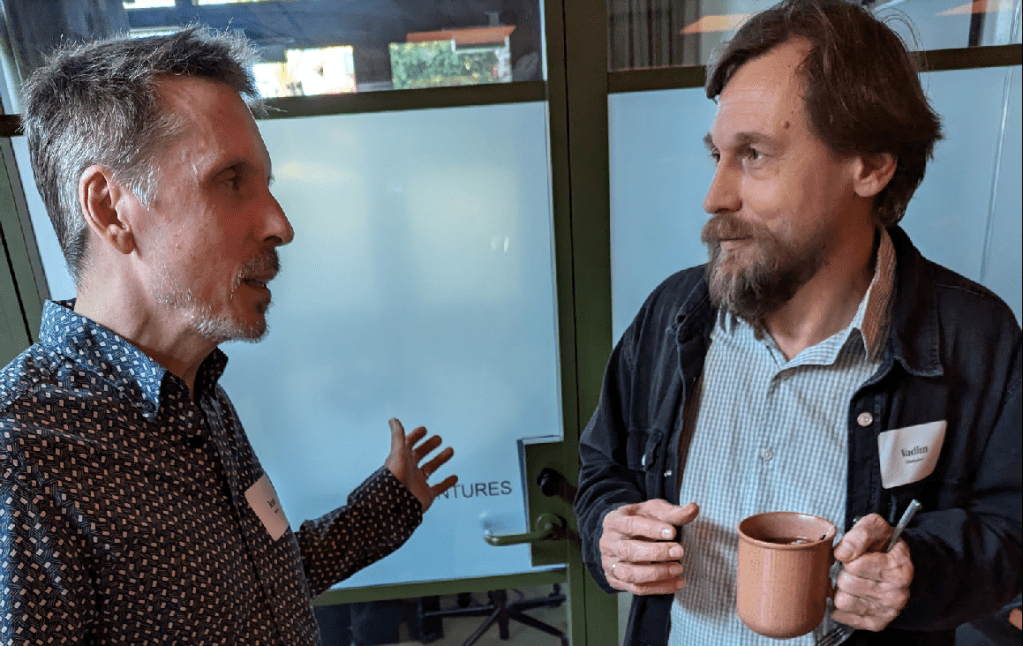
So, what is aging?
Continue reading “what is aging?”the Mtindo Network
I recently learned about the Mtindo Network, an organization based in Uganda that promotes liberty and economic development through education. They asked for a digital copy of The Ethics of Anarcho-Capitalism so they could print physical copies to distribute in Uganda and neighboring countries.
Did I dare to give the layout and cover files to some random person on the internet? Absolutely.

It was nice to hear later that students from Uganda, Malawi, Kenya, and the Democratic Republic of the Congo were able to come together at the African Liberty Camp and learn about free markets, entrepreneurship, and other ideas that anarcho-capitalists hold dear. Hopefully this will lead to greater wealth and happiness in those and surrounding areas in the years to come.
the geroscience hypothesis
The older you become, the more likely you are to get a variety of diseases: atherosclerosis, cancer, diabetes, etc. Part of the reason is that your cells and organs don’t work as well at advanced age. Your cells have more genetic damage, so they become cancers more frequently. At the same time, your immune system kills cancerous cells more slowly. These and similar mechanisms lead to a higher frequency of diseases in late-life, many of which are incurable.
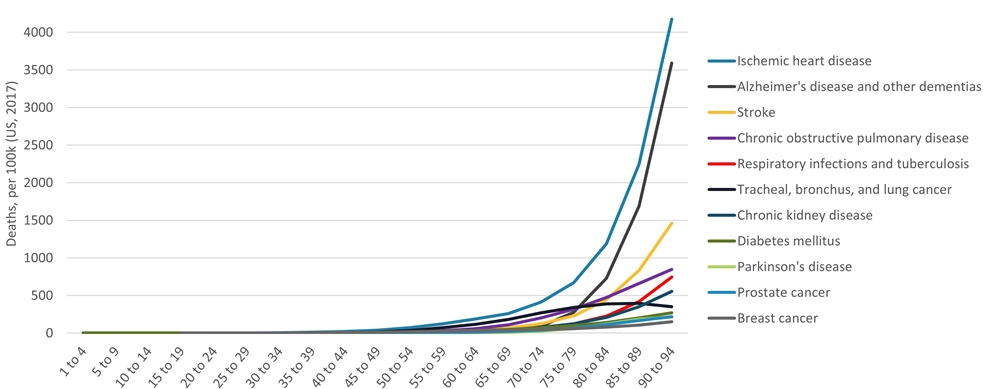
What gives room for hope is the idea that the age-related diseases observed in older populations are the consequence of a relatively small set of underlying mechanisms. For example, if arterial plaques lead to both heart attacks and strokes, then we could address both problems by targeting plaques directly. In fact, it will be faster and easier to target these age-related changes to prevent disease, rather than trying to develop individual therapies age-related conditions after they occur.
Continue reading “the geroscience hypothesis” Kris Borer